
This Week in American History
This week in 1869, the Mount Washington Cog Railway opens taking passengers to the summit of Mount Washington, NH. The track is three miles long with some inclines reaching 37 degrees.
Here is what happened this week in American History.
• Aug. 27. On this day in 1776, the Battle of Long Island takes place. After the Continental Army defeated the British during the Siege of Boston that took place Apr. 19, 1775 to Mar. 17, 1776, Gen. George Washington moved his army to defend New York and its major port. As the Battle of Long Island begins, Washington has only 10,000 soldiers and militia available while the British are fielding about 20,000 trained soldiers and mercenaries. About 9 pm the prior night, British forces began moving toward Continental positions while leaving their campfires burning to fool Washington’s troops into believing they were still in camp. The ruse worked and around 1 am the British attacked. Continental forces were forced into a fighting retreat as the British attempted to outflank them with fighting both brutal and bloody. With no more than 300 men, Colonial Brig. Gen. Samuel Holden Parsons drives the British off Battle Hill, inflicting an estimated 40 percent of the British casualties suffered during the day. Unknown to Parsons, his small but ferocious force had already been surrounded and were killed or captured. Slowly, Colonial forces began to collapse against the onslaught and Washington realizes his error, that this was the main attack and not a feint. Many of the Continental forces were able to find safety in the fortified American position at Brooklyn Heights. The British cease the attack, thinking the Royal Navy will assist in surrounding Washington’s remaining forces forcing his surrender.
• Aug. 28. In 1776, additional American troops bolster Washington’s forces in the Battle of Long Island, but they are still painfully outnumbered by the British. Rain moves into the area and throughout the afternoon Washington had his cannons bombard British positions. During the foggy night that followed, Washington and his forces slip away using flat-bottomed boats to escape the trap. They also manage to take most, if not all, of their artillery. It is estimated that Washington saved about 9,000 of his troops. With the battle over, the Continental Army had suffered 300 killed, 800 wounded, and 1,079 captured or missing. The British suffered 64 killed, 293 wounded, and 31 missing.
• Aug. 29. Today in 1869, the Mount Washington Cog Railway opens, becoming the first mountain-climbing rack railway in the world. The train climbs Mount Washington in New Hampshire along an average grade of 25 degrees with 37 degrees in some places and is about three miles long. When originally steam-powered, it took the train over an hour to make the ascent. Today’s diesel and biodiesel engines accomplish the route in just over half an hour. It is estimated the train has taken over five million people to the summit of Mount Washington.
• Aug. 30. On this day in 1776, British forces occupy the fortifications that had been used by the Continental Army during the Battle of Long Island. When word arrives in England of the American defeat, there are widespread celebrations and criticisms of the new American army and its leadership. But Washington’s timely retreat and saving of his forces are seen by some historians as one of his greatest military achievements. His forces have fought, they have been bloodied and beaten, but they are becoming experienced fighters.
• Aug. 31. In 1943, the Buckley-class destroyer escort USS Harmon is commissioned, becoming the first US Navy ship to be named after a black person. Leonard Roy Harmon served as a Mess Attendant First Class on the cruiser USS San Francisco. During the Naval Battle of Guadalcanal, the San Francisco was raked by Japanese gunfire, killing nearly every officer on the bridge. Without regard for his own safety, Harmon rushed to the bridge to evacuate the wounded and died while protecting a shipmate. He would be awarded the Navy Cross and Purple Heart. Ready for action late in World War II, the USS Harmon escorted convoys and served as escort and anti-submarine screen at Iwo Jima and received three battle stars before being decommissioned in 1947. She was sold for scrap in 1965.
• Sept. 1. Today in 1836, Narcissa Prentiss Whitman becomes one of the first English-speaking white women to settle west of the Rocky Mountains. Born Mar. 14, 1808, Whitman becomes a schoolteacher and part of what has become known as the Second Great Awakening – a religious revival in the late 1800s to early 1900s that swept across the US. She then becomes a missionary and with her husband and other people move west to Fort Walla Walla, near what is now Walla Walla, Washington. She helps build a mission that becomes a noted stopping point along the Oregon Trail. She teaches classes to the Native Americans and at age 29 gives birth to the first white American born in Oregon Country. She dies Nov. 29, 1847, during an attack by the Tiloukaikt.
• Sept. 2. On this day in 1935, a devasting Category 5 hurricane strikes the southeastern US. With highest wind speeds of 185 miles per hour, the hurricane passes near Long Key, FL before making a second landfall near Cedar Key. The town of Islamorada is obliterated and nearly all of the structures in Marathon and Tavernier are destroyed. The storm comes ashore again east of the Florida Panhandle, impacts southern Georgia, South Carolina, North Carolina before moving into the New England area. It is reported the deaths of 490 people are directly attributable to the storm which becomes known as the Labor Day Hurricane.
Before you go...
Thanks for reading The Houston Home Journal — we hope this article added to your day.
For over 150 years, Houston Home Journal has been the newspaper of record for Perry, Warner Robins and Centerville. We're excited to expand our online news coverage, while maintaining our twice-weekly print newspaper.
If you like what you see, please consider becoming a member of The Houston Home Journal. We're all in this together, working for a better Warner Robins, Perry and Centerville, and we appreciate and need your support.
Please join the readers like you who help make community journalism possible by joining The Houston Home Journal. Thank you.
- Brieanna Smith, Houston Home Journal managing editor
Paid Posts
Related Articles
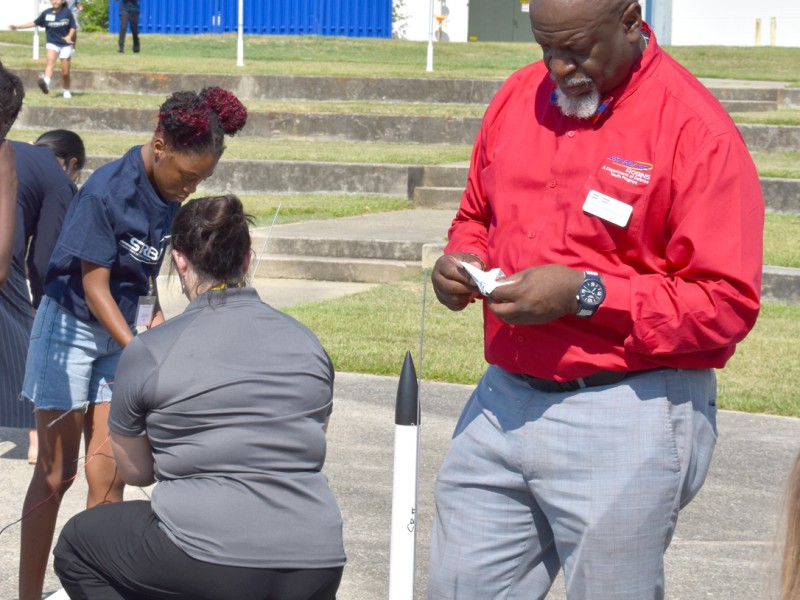
Great futures STEM from Starbase Robins
Starbase Robins offers education and fun.

Andy’s Astronomy: Space Debris Leave Mark on Moon
On Aug. 5, the derelict upper stage of a SpaceX Falcon 9 rocket slammed into the Moon’s surface.
For some time it has been known this was going to happen and it gave astronomers ample opportunity to view the results.

DID YOU KNOW …? What was the first fast-food chain to sell drive-through food?
It’s hard to think about sometimes, but one year ago today I was recovering from a heart attack … and I think I’ve made a pretty good recovery, all things considered.
During my illness back then and the convalescence that followed, the one thing that never faltered was the trivia! I managed to have a column ready each week, regardless of circumstances.
Not bad, eh?
Here’s this week’s collection of nonsense for you to enjoy, and I hope you do!