
At Universal Scrap and Recyclers, ‘scrappy’ sisters have faith like precious metal
The facility’s office managers take the industrial setting and use it as a vehicle to share the spiritual.

WARNER ROBINS — 100,000 pounds a day.
100,000 pounds a day, five and a half days a week, is enough to get you a military tank a day. An F-15 a day. Not an aircraft carrier, those weigh around 100,000 tons, but definitely close to a warship.
100,000 pounds a day. That’s how much Rebecca Martin estimated Universal Scrap and Recyclers, LLC, takes in on any given day.
A good portion of that comes from “steel” automobiles, she said, but look around the several-acre lot and you will see hills of appliances, lawnmowers and fencing, along with giant piles of precious metals like aluminum.
Martin, along with her sister, Ashley Spearman are office managers for the facility. They “never fight”, both said, and if you hang out with them for 30 minutes, they’ll make a believer out of you. (And maybe a believer in something else – “Someone” else – as well.)
The facility is owned by Keith and Jenny Hall, a couple they met in church. It’s one of five they own, Spearman said. The one the dynamic duo operates – yes, that’s an accurate term – on Bargain Road in Warner Robins, had been closed since 2021.
“Keith’s father passed away,” Martin said, “and I guess he didn’t have insurance or the resources to keep this place going. I mean he lost his daddy. His daddy was the original owner of this. How could he go on?”

The answer was through the efforts and dedication of the two. There’s some between-the-lines details but the answer for them is simple on how this unfolded. “Jesus put us here,” Spearman said. Martin seconded it before Spearman energetically wrote it in stone like the Ten Commandments – their calling: “Jesus did it.”
They took over in 2024. Jesus didn’t teach them how to take a blank slate – an empty lot – and make it what it is today. He didn’t teach them the different types of metal. Others did that, which was also one of the most difficult parts to learn, Martin said. He didn’t teach them how to deal with the numerous things they had to learn by “trial and error” or a language barrier. Most of the small handful of employees, the heavy lifters of the operation, don’t speak English. A translator app helps, Martin said, as does one employee who does speak good English.
Jesus didn’t teach them those things … Okay, they would say He helped a lot and they wouldn’t have been able to do it without Him … but He did give them hearts to live out their mission.
If you doubt it, look around their office. Bible verses and encouraging phrases decorate the walls. “Therefore I remind you to stir up the gift of God which is in you through the laying on of my hands.” – 2 Timothy 1:6. “You are so loved.” “Bold for the Lord!!!!” “The devil saw me with my head down and he thought he had won until I said, ‘Amen’.”
Just watch how they deal with customers. Everyone gets a huge smile. Everyone gets a warm look. The kind filled with love and grace and empathy. Nobody leaves without an encouraging word, a blessing, maybe a prayer, maybe more – the gospel message.
“So, one thing we do is we always try to be really friendly and kind,” Spearman said. “To treat them like they’re people. Because a lot of scrappers’ reputation is to be tough and mean and like believe we’re ripping them off.
“But we’re always nice to them, because a lot of them have had hard lives. And so that’s how we minister Christ to a lot of them. We’ve been cussed out and just said, ‘God bless you. Have a good day,’ and like and they will call back up here and apologize. Just because they’ve never had anybody respond to them like that.”
Echoed Martin: “We just try to be really friendly to people that we don’t know. Treat them like they’re somebody. I mean before I came here the Lord showed me in prayer. He showed me these people. I don’t know if it was for here or somewhere else. There were these people in this place, and I was walking. Walking in this vision. I was walking in snow. And the Lord said, ‘Keep going. Keep going.’ But I was tired. And I was like, ‘I don’t want to keep going. I don’t want to keep going. Stop. I just want to go back.’ And he said, ‘Keep going. Keep going.’
“And by the end of the vision, he said, I kept going and I reached this village, and there was a whole village of people that got saved. And the Lord was like, ‘Had you not continued going, these souls would have been lost.’
“And so that’s what I’ve tried to keep in mind. Because it’s not easy. It’s not easy. A lot of people that come up here are very different. Hard. Some of them are hard, they don’t understand. They have trust issues. They’ve never been loved.
“So they’re like suspicious of people that are kind to them. But we’ve made friends. Most of the people up here, we’ve made friends with them.”

That would include customers coming from as far away as South and North Carolina, Michigan, New York. Spearman said they once even had a man present them with a Mexican ID. (Which they couldn’t accept, she added.) Of course plenty come from within the state – trucks usually go to Savannah where the metal is shipped overseas to be melted down and reused, she said – but some of the most precious to them are those closest to home.
They number around 10 individuals. Regulars. They are those who drive around the neighborhoods, load up their vehicle with whatever metal Houston County residents are throwing out that can be recycled and bring it in.
In the grand scheme of things, they actually help keep the city clean, Martin said. Closer to home, they’re just people trying to earn their next meal or put food on the table or gas in the tank. As the song goes about children, “they are precious in His sight,” so too are these to them.
“Yeah, yeah, absolutely. I don’t want them to think we’re up here and they’re down here. So we try to be careful with them and just befriend them and then let that door open. And then if they tell us they’re struggling or one of them comes up and they’re sick, you know, we kind of like try to let the door be open to minister to them that way.
“And I love these times better because they’re not like, their nose is not up in the air. They’re humble. They’re all humble. They know what it’s like to suffer. And I know what it’s like to suffer.
“So really, you’re in denial if you say you don’t know what it’s like to suffer. And you’re just living in self-consumption, because we all are suffering. We just, some people think they’re better than others. They don’t. I appreciate that.”
They work in a self-proclaimed “junk yard.” To step outside of their office is to be engulfed by Georgia’s heat. To walk any distance within the confines of where the work is taking place is to return with shoes covered in dust. Dirt is attracted to your hands even when you don’t touch anything.
It isn’t a church with raised ceilings and fine tapestries or expensive stained-glass windows. It’s not where you might think to go first to reach the lost.
But it offers one of the most beautiful images of the gospel message – not to mention two of its most loving disciples.
“God does recycle and he makes it new,” Spearman said. “He makes us new. He recycles us.”

Before you go...
Thanks for reading The Houston Home Journal — we hope this article added to your day.
For over 150 years, Houston Home Journal has been the newspaper of record for Perry, Warner Robins and Centerville. We're excited to expand our online news coverage, while maintaining our twice-weekly print newspaper.
If you like what you see, please consider becoming a member of The Houston Home Journal. We're all in this together, working for a better Warner Robins, Perry and Centerville, and we appreciate and need your support.
Please join the readers like you who help make community journalism possible by joining The Houston Home Journal. Thank you.
- Brieanna Smith, Houston Home Journal managing editor
Paid Posts
Author

Related Articles
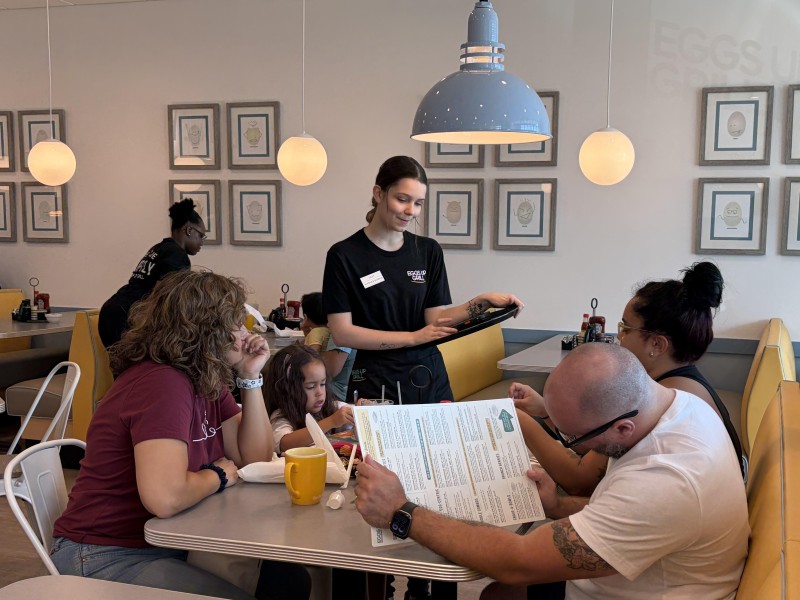
What’s cooking at new breakfast, brunch & lunch spot in Warner Robins?
Meet the franchise owner who’s an Air Force veteran with ties to Robins Air Force Base.

Houston Home Journal — Aug. 22, 2026
Anchor Glass Closing; Additional School Safety; Deputy Honors
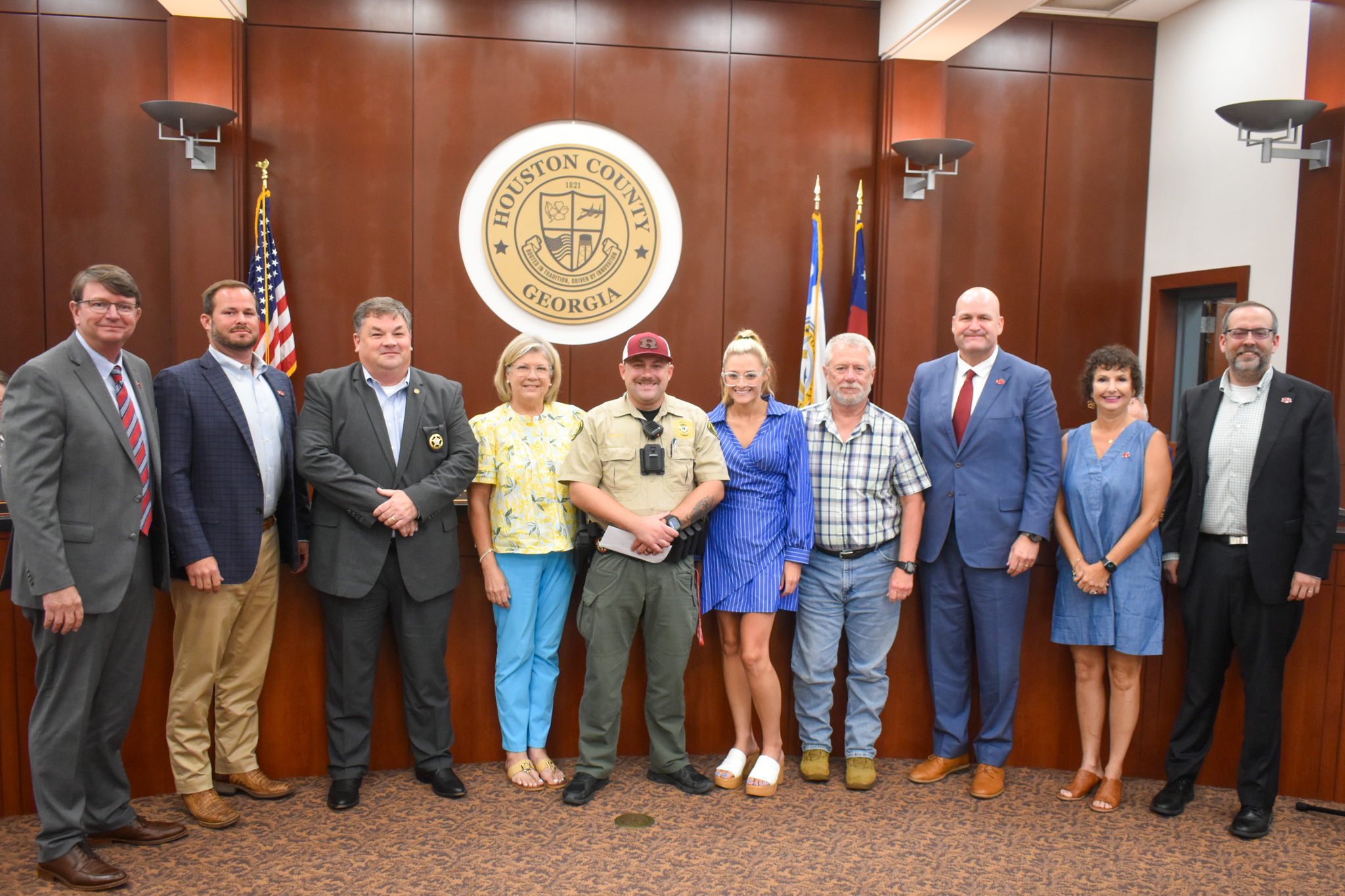
Houston County honors Warner Robins High School Senior Resource Officer and firefighters who aided Brantley County
Houston County Commissioners recognized Deputy Cody Nelson and county firemen in Tuesday’s meeting.