
Andy’s Astronomy: Gamma Cassiopeiae Now Visible
High thin clouds at night made star gazing quite challenging during the week, but persistence pays off.
The star Gamma Cassiopeiae has been visible, but it is one of those stars easier to spot when one does not look directly at it.
High thin clouds at night made star gazing quite challenging during the week, but persistence pays off.
The star Gamma Cassiopeiae has been visible, but it is one of those stars easier to spot when one does not look directly at it.
Located in the constellation Cassiopeia, Gamma Cassiopeiae is actually a multiple and variable star system with the main star located about 550 light-years from Earth. Gamma Cassiopeiae could include up to eight individual stars.
Gamma Cassiopeiae was first discovered in 1866 by Angelo Secchi, an Italian Catholic priest and astronomer. He was the director of the observatory at the Pontifical Gregorian University for 28 years.
Gamma Cassiopeiae is a fast-spinning star with a resultant equatorial bulge. It ejects matter which has formed a “decretion disk”. It is thought to be a subgiant star that is exhausting its supply of hydrogen and is transforming into a giant star – a process that could take a few million years. Currently it has about 17 times the mass of our Sun and is radiating as much energy as 19,000 Suns. The light it gives off has a blue-white color.
To spot Gamma Cassiopeiae, about 9:30 pm look northeast along a heading of 40 degrees at an inclination of about 35 degrees.
Saturday brings the Fall Equinox with equal amounts of daylight and darkness. On that day, sunrise will be at 7:28 am and sunset at 7:28 pm. After the Fall Equinox, the nights will become longer than daytime until the Winter Equinox on December 21, when the days start becoming incrementally longer and the nights slowly shorter. The Fall Equinox is also the harbinger of cooler weather.
Spend more time looking at the night sky instead of your phone.
Meteors can flash across the sky anytime, day or night, and they are spotted quite often. Particularly bright meteors are often referred to as fireballs.
The American Meteor Society webpage suffered a cyberattack that took much of the site offline. The site is currently being rebuilt with reports of fireballs taking priority, Anyone seeing a fireball is urged to report the sighting to https://amsmeteors.org
Going outside and looking at the night sky can be fun and educational for the entire family. There are a number of free apps available to help identify stars and constellations, and some of the apps show satellites.
Happy skywatching!
Before you go...
Thanks for reading The Houston Home Journal — we hope this article added to your day.
For over 150 years, Houston Home Journal has been the newspaper of record for Perry, Warner Robins and Centerville. We're excited to expand our online news coverage, while maintaining our twice-weekly print newspaper.
If you like what you see, please consider becoming a member of The Houston Home Journal. We're all in this together, working for a better Warner Robins, Perry and Centerville, and we appreciate and need your support.
Please join the readers like you who help make community journalism possible by joining The Houston Home Journal. Thank you.
- Brieanna Smith, Houston Home Journal managing editor
Paid Posts
Related Articles

A little odd with a lot of heart. Middle Georgia Oddities finds its home in Warner Robins
If you’re looking for something unique, one-of-a-kind, Middle Georgia Oddities Market is the place for you.

Survey results
What do you think? Lab-grown food products. Yes or no?
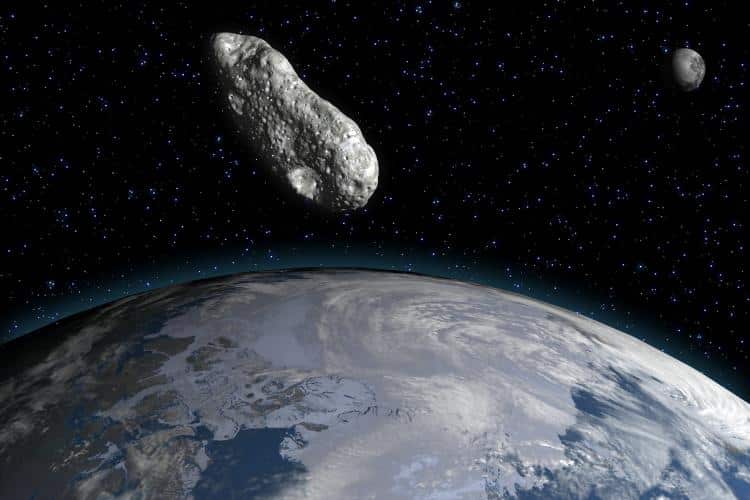
DID YOU KNOW …? Did the world almost come to an end in 1989?
Well, since we now know who said what (check last week’s column if you don’t know what I’m talking about), it’s time to get back to the real business here – sharing incredible trivia.
Also, be on the lookout for some classic Halloween costume ideas. I might actually go to a party this year. Imagine that, me getting out and partying.
On second thought, don’t imagine it. The picture is too unsettling.
Here’s what we should be doing … sharing the trivia. Enjoy, friends!